Zoho One includes over 45 applications spanning CRM, finance, HR, support, and analytics, all built on a shared data model.
Yet a large share of Zoho One implementation projects underdeliver. The system goes live, technically everything works, and within months parts of the team have drifted back to spreadsheets and email.
The platform isn't the problem. How it gets implemented is.
This Zoho One Implementation guide covers the patterns that cause implementations to fail, what a proper implementation involves, and what to look for whether you're doing this yourself or hiring help.
What a Complete Zoho One Implementation Guide Should Include
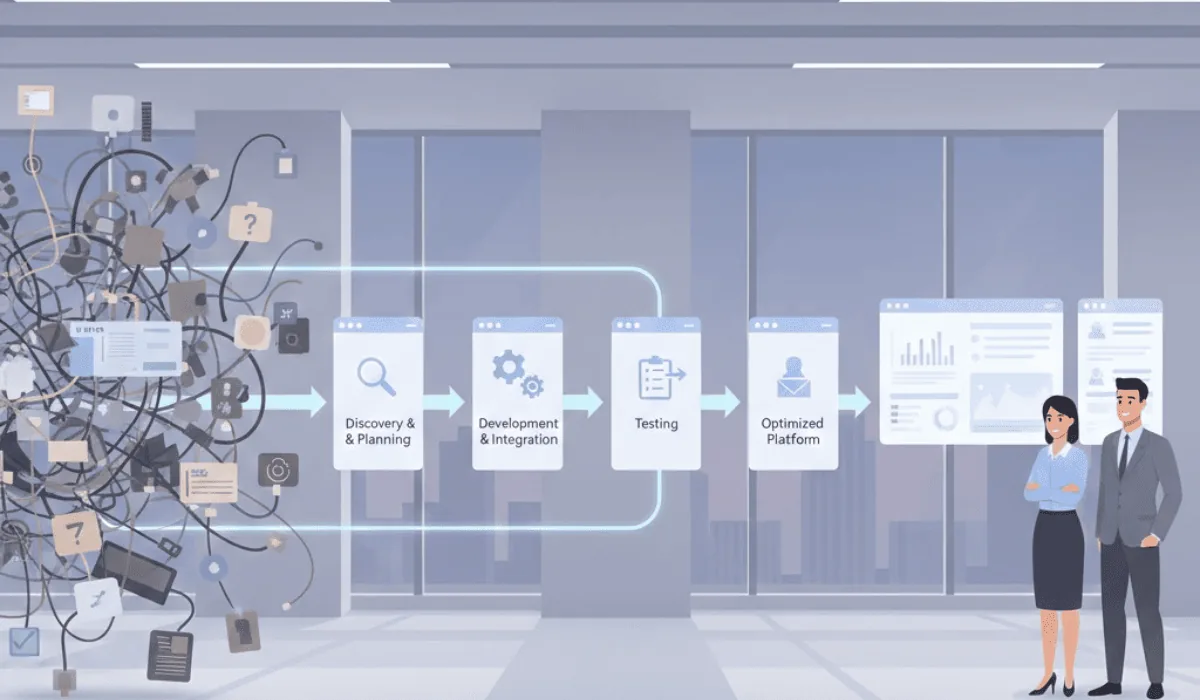
Any serious approach to Zoho One needs to cover four things, in order:
- Mapping how the business currently operates
- Configuring applications around that reality, not Zoho's defaults
- Migrating and cleaning existing data before it enters the new system
- Training each team on the parts relevant to their role
Skip any one of these, and the system that goes live will be technically functional but practically unused. If you're unsure where your business stands, our services page covers how we approach this kind of assessment.
CRM Built on Defaults, Not the Real Sales Process
This is the most common failure point, because nearly everything else in Zoho One depends on CRM being structured correctly.
Out of the box, Zoho CRM ships with a generic pipeline: Qualification, Needs Analysis, Proposal, Negotiation, Closed Won/Lost. For many small businesses, this doesn't match reality at all.
- A referral-driven business might go from first contact to signed agreement in days, with no formal "proposal" stage
- A service business might follow: inquiry, site visit, quote, scheduled, completed, invoiced
What happens when the pipeline doesn't match reality:
- Reps force every deal into whichever stage feels closest, or stop updating stages
- Every report built on that data, pipeline reviews, forecasts, conversion rates, becomes unreliable
- Leadership makes decisions on numbers that don't reflect reality
What Correct Configuration Looks Like
- Document the actual sales process as it really happens, not as a manual says it should
- Review recently closed deals and map the stages they actually passed through
- Build custom fields around what the business needs to track: a referral-driven business needs a required "referral source" field, not an optional one
This is the gap we work through in our Zoho One implementation services, starting with how the business actually sells before anything gets built in CRM.
Automation Built on an Undefined Process
Zoho Flow and CRM workflow rules can automate notifications, task assignment, follow-up sequences, and cross-app syncing. The mistake is automating a process that was never clearly defined.
If "follow up quickly" means something different to every rep, automating a generic reminder doesn't fix that. It just formalizes the inconsistency.
What effective automation looks like:
Once that standard exists, Zoho Flow can enforce it: instant notifications, escalation triggers, daily response-time summaries.
Define the standard first. Automate it second. Reversing that order just makes inconsistency move faster.
Data Migration Treated as Copy-Paste
Moving from spreadsheets, an old CRM, or another platform into Zoho One is the best opportunity to clean up years of data problems. This step gets rushed more than almost any other.
Common issues carried over unchanged:
- The same company existing as multiple records due to inconsistent naming
- Contacts marked "active" that haven't been touched in years
- Status fields with a dozen overlapping values meaning the same thing
- Missing or inconsistent fields that break segmentation and reporting
A system built on unaddressed data problems is the old mess with a better interface. Deduplication and standardization before migration, not after, is one of the highest-leverage steps, and one of the most commonly skipped, because it's tedious.
Training as One Generic Session for Everyone
A common pattern: a single 60–90 minute session covering CRM, Books, Desk, and People, delivered to sales, finance, support, and HR all at once.
Each person sits through mostly irrelevant content while the parts that matter get a few rushed minutes. Months later, adoption is uneven: people use what was clearly explained and fall back to old workarounds for the rest.
Role-Specific Training in Practice
- Sales: working deals in CRM, logging activity, updating stages
- Finance: invoicing, payment tracking, and reports in Books
- Operations: what automations are doing in the background, what triggers them
Training delivered close to go-live, focused only on what each team needs, sticks far better than generic sessions weeks in advance.
No Plan for the Period After Go-Live
This is the most consequential gap, and the one most implementations skip entirely.
The first 60 to 90 days after launch are when a system gets tested against real conditions, real customers, real edge cases, real volume.
Common issues that only surface after go-live:
- Mobile connectivity issues for field teams in low-signal areas
- A reporting field that seemed sufficient but turns out ambiguous once multiple people use it differently
- An automation that works for 95% of cases but breaks in a scenario nobody considered
Implementations that end at go-live leave these for the business to discover on its own, often after trust in the new system has already started to erode. Structured check-ins during this period, reviewing real usage and adjusting accordingly, produce far higher long-term adoption.
What's Typically Included in Implementation Services
- Discovery and process mapping: before any application is configured
- CRM and application configuration: built around the mapped process, not defaults
- Data migration and cleanup: deduplicated and validated before entering the new system
- Role-specific training: separate sessions, timed close to go-live
- Post-launch support: structured check-ins during the first 60 to 90 days
Engagements that skip the first and last items are the ones most likely to need significant rework within a year.
What Drives Zoho One Implementation Cost
Cost depends primarily on:
- How many applications are being configured
- How complex the required automations are
- How much existing data needs cleanup before migration
Why structure matters more than the total figure:
Phased pricing tied to specific deliverables, getting the pipeline working first, then invoicing, then reporting, surfaces problems early and lets a business confirm each phase before committing to the next. A single large fee for everything at once makes issues much harder to catch before they're baked into every subsequent phase.
Why This Matters More in 2026
Most guides treat Zoho One implementation as a one-time technical project. That framing is outdated.
A growing share of searches are now answered directly by AI Overviews and AI assistants, pulling from whatever data a business has connected and structured. A fragmented setup, CRM here, invoicing there, manual reporting, doesn't just create inefficiency. It limits what AI tools can do with that data, whether that's Zia inside Zoho or an owner trying to get useful answers from their own systems.
A properly implemented system, one data model, clean records, connected apps, is the foundation that determines whether AI-powered features produce anything useful or just confident-sounding nonsense from incomplete data. The failure points above increasingly determine whether a business's data is even usable by the tools built to make sense of it.
What Makes an Expert Implementation Different
The technical work, turning on apps, building workflows, configuring dashboards, is relatively straightforward. What separates an implementation that gets adopted from one that quietly fails is whether the less visible work happens first.
An experienced implementation partner:
- Documents the real process before configuring anything
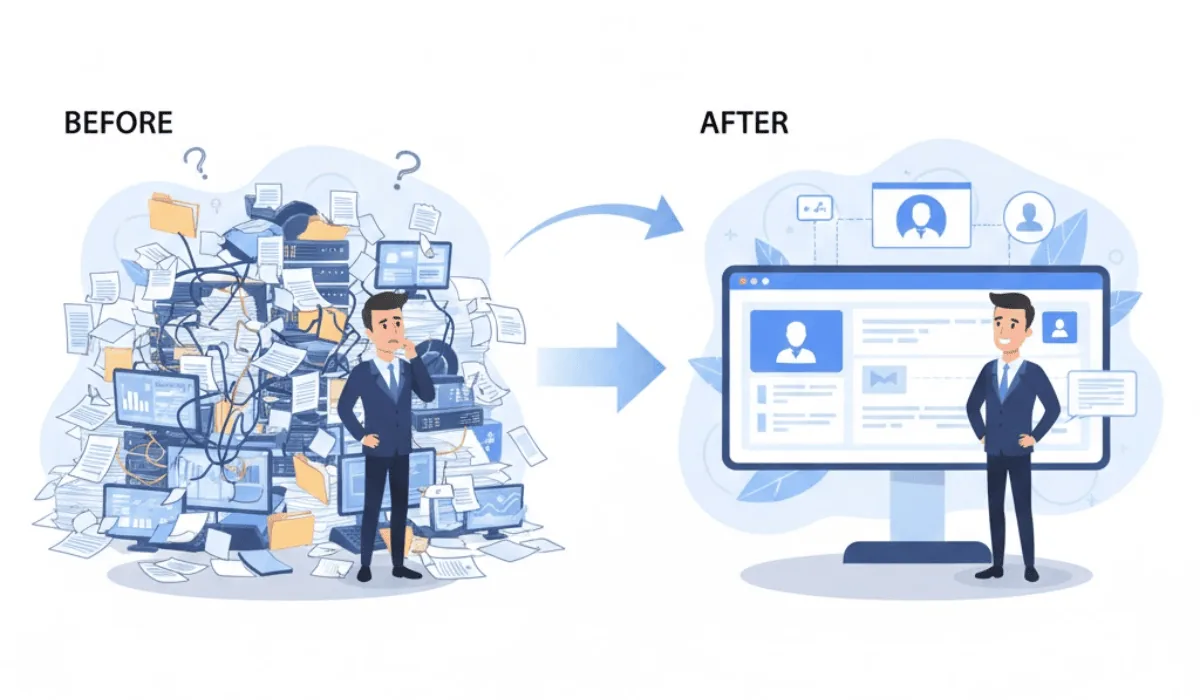
- Treats data migration as a cleanup opportunity, not a copy job
- Trains each team separately on what's relevant to them
- Stays involved long enough after launch to catch what planning missed
It's the difference between a system that's technically live and one a team actually relies on six months later. Our services page breaks down what's included at each stage. If the leads feeding the CRM are still coming from a website that was not built to capture them, our website and AI chatbot development services cover that side of the system too.
Frequently Asked Questions
Why do implementations fail even when the system is technically working?
"Working" and "matching how the business actually operates" aren't the same thing. A system configured to generic defaults but not reflecting real workflows gets used inconsistently or abandoned, even though nothing is technically broken.
How long should a Zoho One implementation take?
For most small and midsize US businesses, 4 to 12 weeks, done in phases. Compressed timelines that skip discovery or data cleanup tend to need significant rework later.
What determines Zoho One implementation cost?
The number of applications configured, automation complexity, and how much data cleanup is needed. Phased pricing tied to deliverables surfaces issues earlier than one upfront fee.
What should I look for in a Zoho implementation partner?
Someone who starts with process mapping before opening any application, treats data migration as its own step, builds separate training for each team, and includes support for the 60 to 90 days after go-live.
Can a business implement Zoho One without outside help?
For straightforward, single-app setups, yes. CRM structure matched to a real sales process, clean data migration, and reliable automation are the areas businesses most often get stuck, and the most expensive to fix later.
Where can I find a guide for my industry?
The core principles, process mapping, configuration, clean migration, role-specific training, apply across industries, but specifics vary. A real estate brokerage's pipeline looks nothing like a field service company's job workflow. See our real estate page for what this looks like for brokerages specifically, or our guide to the best CRM for solo real estate agents if you're a solo agent comparing platforms.
Ready to get your implementation right?
We start every engagement with a free consultation, no pitch, just a look at how your business actually operates.
Book a Free Call